What is peak power?
Frequently asked questions
What is peak power — and why does it affect your bill?
⚡ What is peak power?
Peak power (measured in kW) is the highest point of your electricity use within a 15-minute window.
So it’s not just about how much electricity you use in a day — it’s also about how much you use at the same time.
Think of it like rush hour traffic: the more cars on the road at once, the more congestion. The electricity grid works in a similar way. If you run lots of appliances at the same time, you put a heavier load on the grid — and your grid operator takes that into account on your bill.
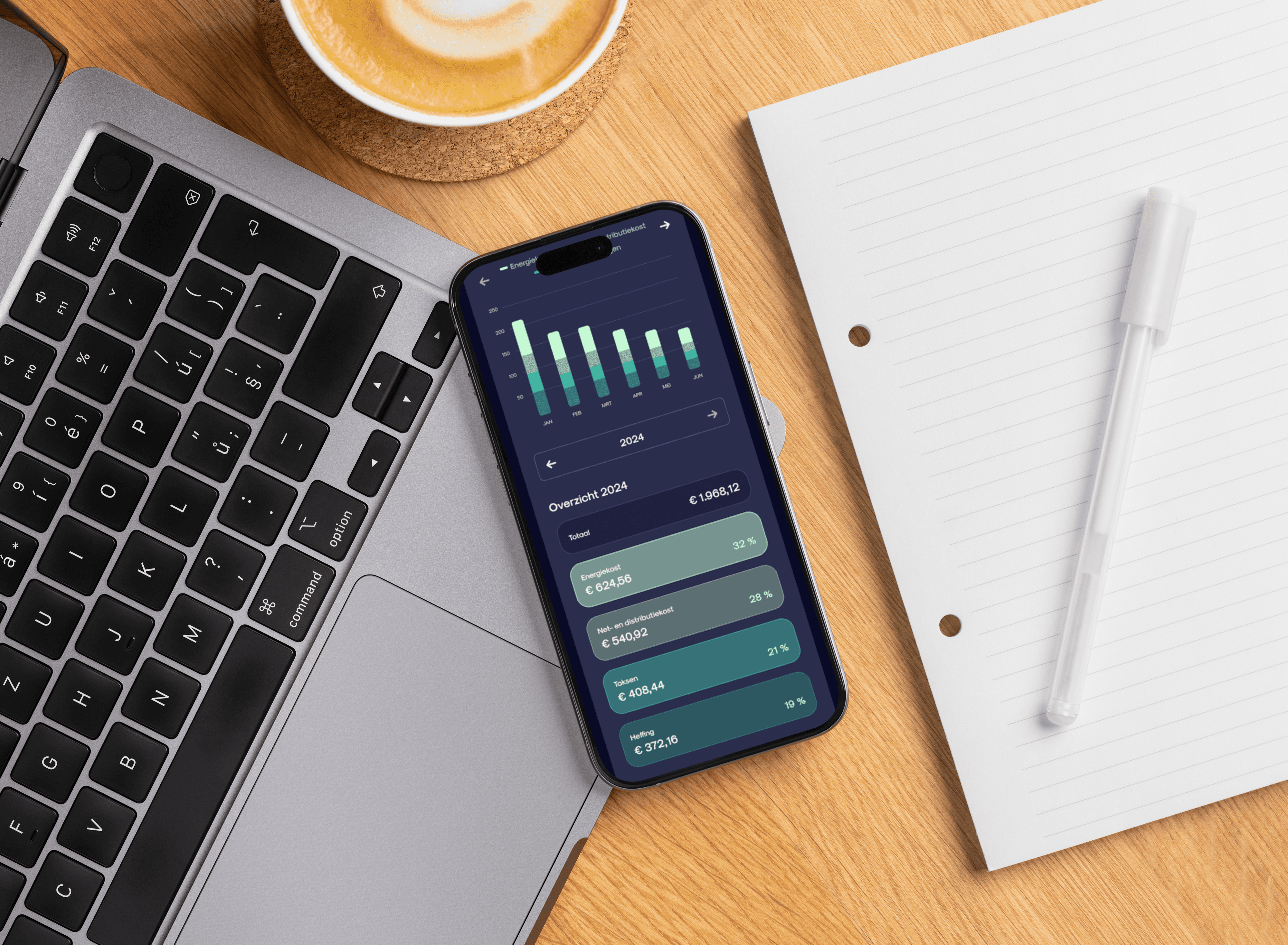
🧾 What’s actually included in your electricity bill?
Your electricity bill has three parts:
Energy cost: the price you pay to your supplier (like Ecofix).
Grid fees: what you pay for using and maintaining the grid.
Taxes and levies: set by the government.
Since 2023, the capacity tariff has been included in the grid fees. That tariff is calculated based on your usage and your peak power.
On average, the capacity tariff makes up around 14% of your total bill. So yes — it matters.
📊 How is your peak power calculated?
That depends on your meter:
You have a digital meter
Your meter records your usage every 15 minutes and calculates how much electricity you used at the same time. The highest 15-minute value in a month is your monthly peak.
👉 The average of your last 12 monthly peaks is used to calculate your capacity tariff.
💡 Is your monthly peak lower than 2.5 kW? You still pay the minimum based on 2.5 kW. So everyone pays at least that base amount.
You still have a classic meter
Then your peak can’t be measured. In that case, you pay the fixed minimum of 2.5 kW.
But heads-up: your grid cost per kWh is higher than for someone with a digital meter.
You’re on a social tariff
Good news: the capacity tariff doesn’t apply. You pay a fixed all-in price per kWh.
🧠 Why does this matter to you?
Do you have a heat pump, EV charger, electric car or other big consumers at home? Then small changes can lead to real savings:
Don’t run all heavy appliances at once.
Plan EV charging or laundry for moments when other appliances aren’t running.
💡 Get smart with Ecofix Motion
With Ecofix Motion (our dynamic tariff), you get live insight in the app into hourly prices and your consumption. That way you can see when electricity is cheapest and plan your appliances accordingly.
And if you like things really smart: soon, with Ecofix Digi, you’ll be able to automatically control your EV charger or home battery. Until then, you can already reduce peaks manually using the live price view in the app and on our website.
☝️ Quick example: what does a “peak” look like?
Let’s say your dryer uses 2.5 kW and your microwave uses 1 kW. If you run them at the same time, your peak becomes 3.5 kW.
That peak — measured over a 15-minute window — counts for your capacity tariff. The more often that happens, the higher your 12-month average peak becomes.
Did you know that 77% of people with a digital meter have an average monthly peak below 5 kW? With a bit of planning, you’ll be in that group too.
✅ Conclusion
Peak power sounds technical, but with a few smart habits, it’s absolutely something you can control. Spread your usage, lower your peaks, and you’ll save — on the grid and on your bill.
And with Ecofix Motion, we make it easy.
➡️ Want to know your monthly peak? Check your digital meter or log in to the Ecofix app.
Smart energy for everyone — even if you thought “peak power” only belonged in the gym 😉